
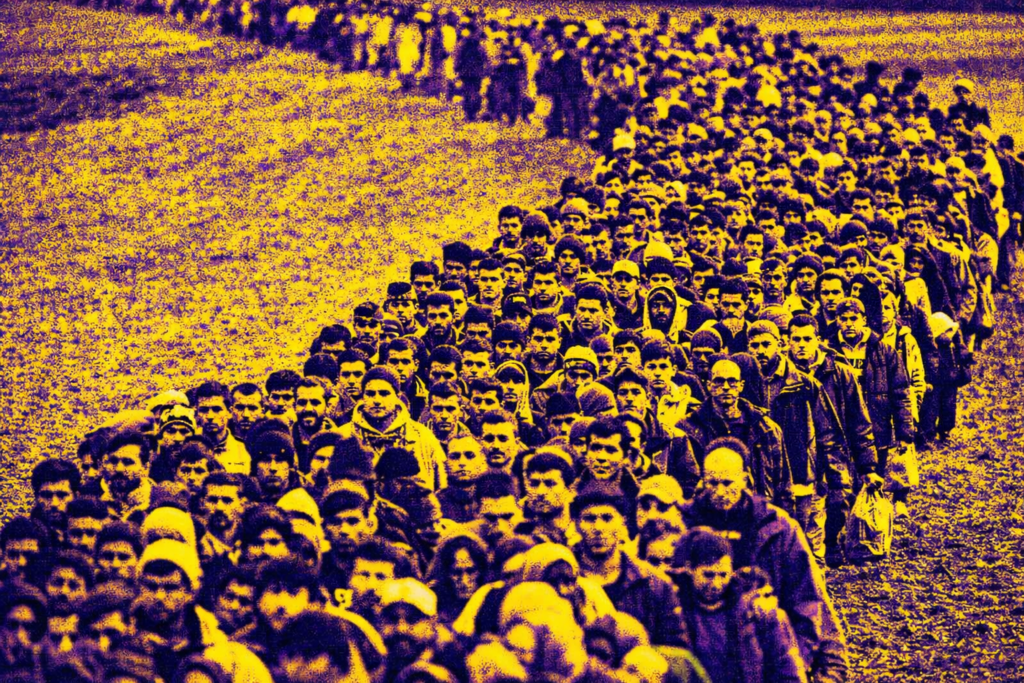
How Media Became Infrastructure—From Cold War Psy-Ops to the Border Surge and Europe’s Open Door
Migration is usually discussed as a physical act. People move. Borders strain. Cities absorb. Governments react. But that framing skips the more decisive phase—the one that happens before the first step is taken. Long before bodies move, expectations move. Possibility moves. Permission moves. And in modern politics, those things move through media.
Journalism likes to imagine itself as a mirror, passively reflecting events as they unfold. In reality, it has increasingly functioned as something closer to infrastructure: an enabling system that shapes behavior by signaling what is safe, what is possible, and what is inevitable. Roads don’t tell people where to go. They tell people where they can go. Media does the same thing—psychologically, socially, and politically.
This is not an argument about lies. It is an argument about directional truth.
The Cold War Blueprint
The idea that information environments shape mass behavior is not new, and it did not originate on cable news. During the Cold War, the United States understood this with ruthless clarity. In Central and South America during the 1980s, the Central Intelligence Agency treated journalism as a strategic domain. Reporters, editors, and outlets were cultivated, funded, briefed, and in some cases quietly steered—not to fabricate events, but to frame them.
Civil conflicts in El Salvador, Nicaragua, and Guatemala were not merely military contests; they were battles over perception. Who was legitimate. Who was reformist. Who was brutal. The method was rarely crude propaganda. It was far more effective than that. By shaping which facts were emphasized, which risks were minimized, and which outcomes were normalized, media coverage created an interpretive lane through which audiences—domestic and foreign—were expected to travel.
The Cold War eventually ended. The technique did not.
From Intelligence to NGOs
What changed after the 1990s was not the insight, but the delivery mechanism. Direct intelligence involvement became politically radioactive. Into that vacuum stepped a sprawling ecosystem of NGOs, development agencies, and democracy-promotion initiatives. Among them, USAID emerged as one of the most influential actors—not only funding infrastructure and humanitarian aid, but increasingly funding media itself.
Under banners like “journalism capacity,” “counter-disinformation,” and “media development,” entire professional classes of reporters around the world became embedded in grant-based systems with clearly defined norms, expectations, and red lines. This did not require editors to receive marching orders. Incentives did the work. Careers formed around acceptable frames. Reputations formed around moral alignment. The ecosystem learned, collectively, what stories advanced and which stalled.
At scale, this is no longer merely support. It is infrastructure.
The Border Signal Under Obama
This dynamic became visible closer to home during the back half of Barack Obama’s presidency. Between 2013 and 2016, the southern border experienced a sharp increase in migration, particularly among unaccompanied minors. The policy debate focused on enforcement, asylum law, and executive discretion. Less attention was paid to the information environment that preceded the surge.
Spanish-language media, regional broadcasters, and transnational outlets began consistently emphasizing a particular set of signals: enforcement was weakening; deportation was unlikely; asylum claims would be heard; entry carried moral legitimacy. These were not fabrications. They were interpretations—but interpretations repeated often enough to function as guidance.
When journalists later interviewed migrants about why they came when they did, many did not cite smugglers or rumors. They cited media reports. They had watched, listened, and concluded that the conditions had changed. The road, again, was informational before it was physical.
Europe’s Open Door
The same pattern unfolded on a larger scale following the collapse of Libya and the civil war in Syria. Europe’s migration crisis did not begin with boats crossing the Mediterranean; it began with narratives crossing borders. Coverage across North Africa and the Middle East increasingly portrayed Europe as open, welcoming, and structurally prepared to absorb mass arrivals.
Migrants interviewed along transit routes described seeing European broadcasts and local reporting that emphasized protection, entitlement, and inevitability. NGOs reinforced the message. Media and humanitarian language fused into a single signal: movement would be rewarded. Once again, this was not about fabrication. It was about selective amplification. Risks were downplayed. Friction was minimized. Moral framing replaced logistical reality.
By the time European governments realized the scale of what was coming, the informational groundwork had already been laid.
When Journalism Reaches Scale
Recent disclosures that USAID-linked programs supported more than 6,000 journalists worldwide should not be read as scandal in isolation. The number matters less than what it represents. At that scale, journalism ceases to be merely a profession and becomes a system—one capable of shaping mass behavior without issuing commands.
No single reporter needs to be compromised. No outlet needs to be controlled. When funding, prestige, and access flow in one direction, narratives follow naturally. This is how infrastructure works. It does not coerce; it channels.
The result is a media environment that does not tell people what to think, but quietly tells them what is reasonable to expect.
What this reveals is the mature form of what was previously described in The Shadow President as the NGO–IC Fusion. Intelligence agencies no longer need to directly shape narratives when NGOs can do it at scale, and NGOs no longer need to overtly advocate policy when journalism quietly establishes inevitability. The functions once performed through covert briefing and placement are now achieved through grants, professional norms, and moral credentialing. The result is a hybrid system—neither state media nor free press in the classical sense—where information flows are formally civilian but structurally aligned with institutional power. This is not censorship. It is something more durable: a self-maintaining ecosystem in which policy preferences are laundered into consensus through ostensibly independent voices, and dissent is framed not as disagreement but as deviance from shared moral understanding.
The Domestic Reflection
This framework helps explain why migration debates so often feel detached from lived consequences. Once journalism functions as infrastructure, questioning outcomes begins to feel like questioning morality itself. Resistance is framed not as prudence, but as cruelty. Hesitation is treated as ignorance. The same NGO-media lattice that once operated abroad now operates domestically, with certain states and cities functioning as ports in a system whose logic was built elsewhere.
That parallel is not accidental. It is structural.
The Road Before the Crowd
Mass migration is never spontaneous. It follows maps. In the modern world, those maps are drawn less by policy than by narrative. Before borders are crossed, expectations are set. Before enforcement collapses, legitimacy is conferred. Before crowds move, media prepares the way.
Understanding this does not require conspiracy thinking. It requires historical memory. Journalism did not stumble into this role. It grew into it—quietly, professionally, and with the best intentions. But infrastructure, once built, shapes outcomes whether anyone intends it or not.
The question, then, is not who moved—but who laid the road.
Sources:
- Carl Bernstein, “The CIA and the Media,” Rolling Stone (October 20, 1977)
- Frances Stonor Saunders, Who Paid the Piper? The CIA and the Cultural Cold War (1999)
- U.S. Agency for International Development (USAID), “Democracy, Human Rights, and Governance”
- Reporters Without Borders, “USAID freeze puts independent journalism around the world at risk” (2025)
- The Guardian, “USAID cuts force closure of newsrooms around the world” (2025)
- U.S. Congress, Report of the Congressional Committees Investigating the Iran-Contra Affair (1987)
- The Guardian (citing U.K. Home Office data), “Social media ads promoting small boat crossings to UK to be banned” (2025)
- Mark Hosenball, “How the CIA Worked With the Media,” Reuters (March 29, 2014)
- U.S. Government Accountability Office, “Foreign Assistance: Actions Needed to Improve Oversight of USAID Media Assistance Programs,” GAO-18-161 (January 2018)
- Columbia Journalism Review, “Foreign Aid and the News Business” (July 30, 2019)
- Dara Lind, “Why the Central American Child Migrant Crisis Is Happening Now,” Vox (July 9, 2014)
- Pew Research Center, “Migration from Latin America Slows” (June 8, 2015)
- BBC News, “Migrant crisis: Why people risk the Mediterranean crossing” (September 16, 2015)
- European Commission, “Irregular Migration & Information Campaigns” (2016)
- Reporters Without Borders, “Public Funding of Journalism and Risks to Independence” (2020)
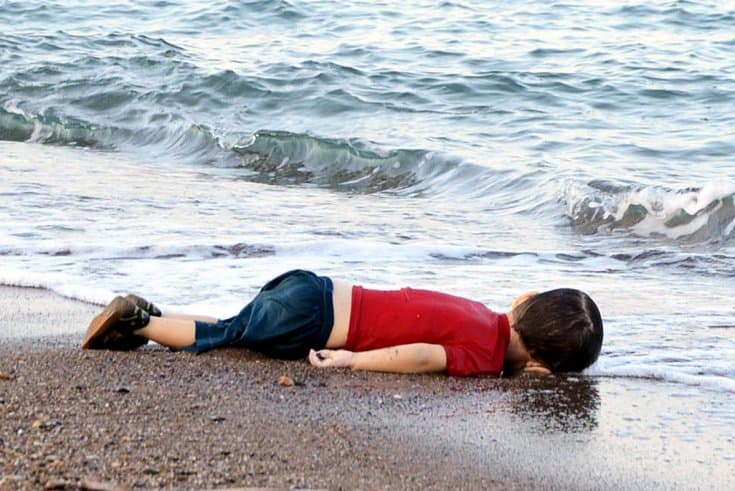
they Use Images Like This
Pingback: Auto-Pilot: The Proxy Presidency (2021–2024) - #TCOT Reporter