
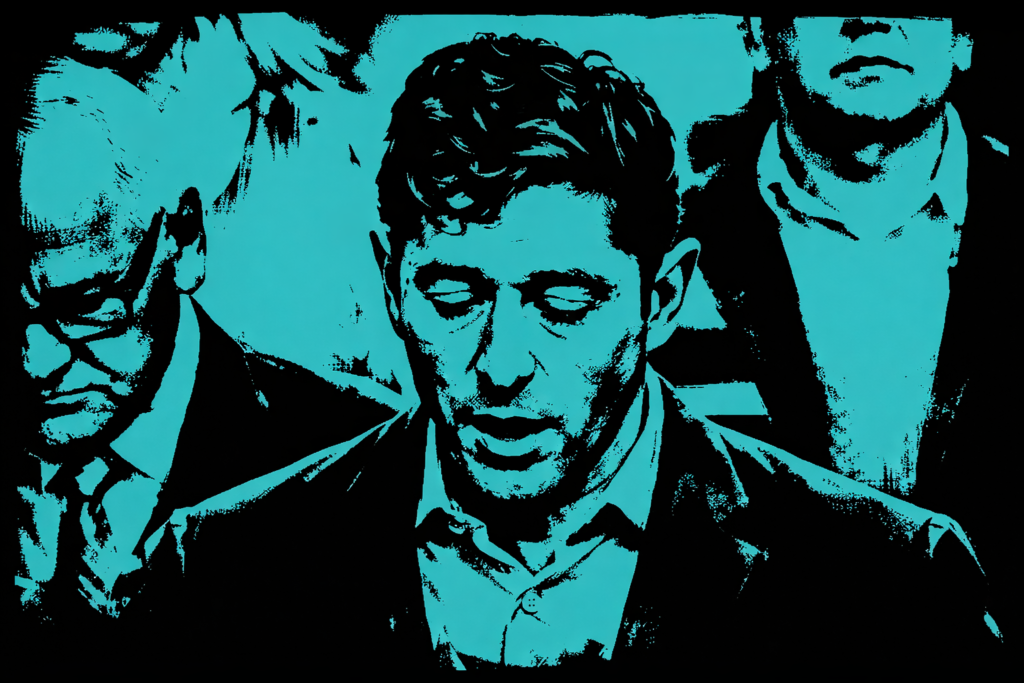
When enforcement becomes “provocative,” and fraud becomes “unfortunate,” what you actually have is a state that no longer believes in authority. Minnesota is the case study.
Minnesota did not wake up one morning to chaos. It arrived the way these things usually do: quietly, incrementally, through a long series of decisions that prioritized narrative management over control.
Two headlines this week tell the story more clearly than any white paper ever could.
In one, Jacob Frey warns that federal immigration enforcement itself risks violence in Minneapolis. In the other, federal prosecutors acknowledge that Medicaid fraud in Minnesota may approach $9 billion, an amount so large it defies the usual language of “waste” or “mismanagement.”
One story is about force.
The other is about money.
Both are about the same thing: a state that no longer believes it can enforce its own rules without destabilizing itself.
That is not compassion. It is abdication.
Enforcement as Provocation
When Immigration and Customs Enforcement carried out Operation Metro Surge, officials emphasized that those arrested included convicted criminals, not random residents swept up in indiscriminate raids. Yet the political response from Minneapolis leadership reframed enforcement itself as the threat.
The mayor’s warning was not that criminal networks would retaliate, or that agitators would exploit arrests. It was that the act of enforcing the law could provoke violence. That framing matters. It signals something deeper than disagreement with federal policy.
It signals that the city no longer trusts its own authority.
When enforcement is treated as an accelerant rather than a stabilizer, the state is implicitly admitting it does not believe law can be applied without social fracture. At that point, enforcement becomes theater: something to be negotiated, messaged, and apologized for rather than executed.
This inversion is rare—and dangerous.
The Money Nobody Controlled
While attention focused on ICE vehicles and protests near Karmel Mall, a much quieter reckoning unfolded in federal courtrooms. Assistant U.S. attorneys confirmed that Medicaid fraud exposure in Minnesota may approach $9 billion, spread across multiple programs, providers, and years.
This is not an accounting error. It is not a paperwork glitch. It is systemic failure.
The Feeding Our Future scandal, once described as an outlier, now looks more like a stress test the system failed. Fake patients, fake addresses, shell nonprofits, and layers of intermediaries siphoned public funds while oversight lagged months or years behind reality.
Crucially, this did not happen because Minnesota lacked laws. It happened because enforcement mechanisms were weak, fragmented, and politically fraught. Oversight agencies deferred. Red flags piled up. Nobody wanted to be the person who “over-policed” a sensitive space.
The result was not equity. It was extraction.
Why These Crises Are the Same Story
The mistake is treating immigration enforcement and Medicaid fraud as separate controversies. They are not.
Both are products of the same governing posture:
- Fragmented authority
- Reluctance to confront organized misconduct
- Heavy reliance on NGOs and intermediaries
- A political culture that treats enforcement as morally suspect
In both cases, leaders responded after damage was done, emphasizing audits, reviews, and messaging rather than acknowledging that prevention failed.
Minnesota did not lack information. It lacked resolve.
When Leaders Fear Backlash More Than Breakdown
There is something historically unusual about a mayor warning that enforcing federal law could itself endanger the city. Governments are designed to monopolize legitimate force precisely so enforcement reduces chaos rather than creates it.
Once that assumption collapses, everything downstream becomes unstable.
The same logic appeared in the fraud response. Officials emphasized recovered funds, future safeguards, and process improvements—after billions had already vanished. Responsibility was diffused across agencies. Nobody seemed fully in charge because, functionally, nobody was.
A state that fears backlash more than breakdown eventually experiences both.
The Voters’ Blind Spot
None of this happens without permission.
Minnesota’s electorate is highly educated, politically engaged online, and deeply confident in institutional goodwill. But confidence is not the same thing as vigilance. Turnout fluctuations, low participation in local oversight debates, and broad trust that “someone else is handling it” create a vacuum.
Into that vacuum step the organized few.
Not immigrants.
Not voters.
Systems.
When accountability weakens, systems optimize for extraction, not service.
The Cost of Pretending These Are Separate Issues
You cannot run a sanctuary model that discourages enforcement while simultaneously operating a high-trust welfare state that assumes honesty. One undermines the other.
You cannot warn endlessly about backlash while billions disappear without consequence and still claim to be governing.
And you cannot build legitimacy by avoiding conflict forever. Eventually, avoidance becomes the policy.
Minnesota did not lose control overnight. It lost the habit of asking uncomfortable questions—and then acted surprised when the bill arrived.
That bill is here now.
Sources:
• U.S. Immigration and Customs Enforcement — “ICE Announces Results of Operation Metro Surge in Minnesota” (2025)
• Star Tribune — “Minneapolis Mayor Jacob Frey Warns ICE Raids Could Trigger Violence” (2025)
• FOX 9 Minneapolis — “Protests Erupt Near Karmel Mall Following ICE Arrests” (2025)
• U.S. Department of Justice, U.S. Attorney’s Office – District of Minnesota — “Minnesota Medicaid Fraud Prosecutions Expand as Losses Estimated in Billions” (2025)
• Minnesota Reformer — “Federal Prosecutors Say Medicaid Fraud in Minnesota Could Reach $9 Billion” (2025)
• U.S. Department of Health and Human Services, Office of Inspector General — “Oversight Failures in State Medicaid Programs” (2024–2025)