
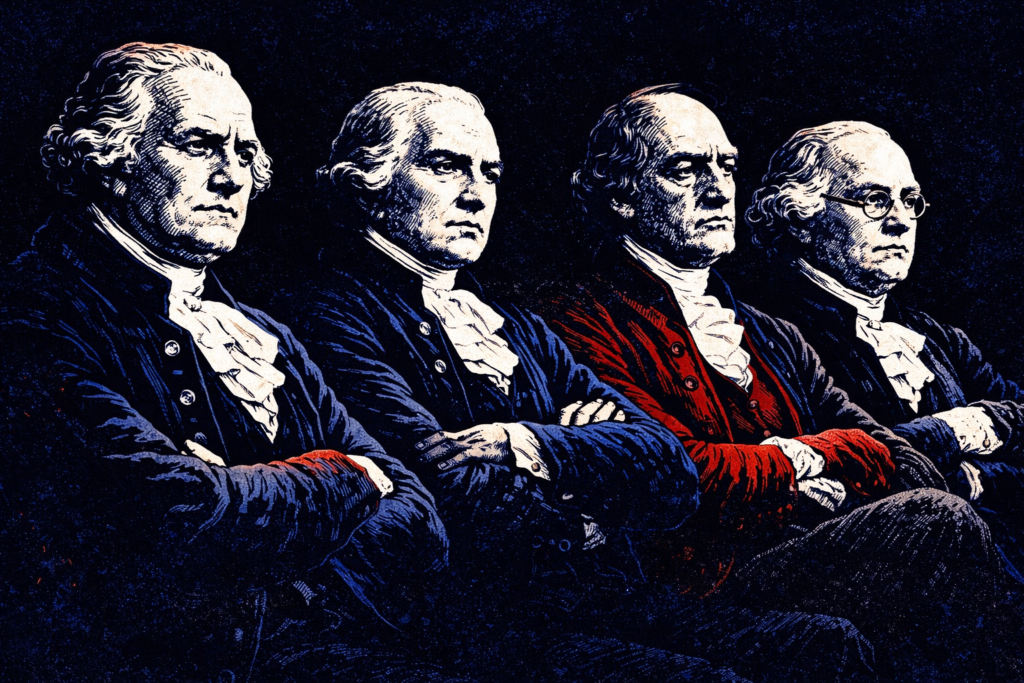
Every incoming president is introduced to Washington with the same quiet reassurance: the professionals will help you. The machinery is experienced, the staff knows the terrain, and continuity will smooth the transition from campaign to governance. It sounds like an offer of support. In practice, it is an initiation ritual.
From the moment a new administration arrives, it is outnumbered by people who have already decided how things are done. Career staff do not need to oppose a president openly to limit his reach. They simply continue doing what they have always done, in the order they have always done it, on timelines that predate the election and will outlast the term. The new boss learns quickly that authority travels through channels he does not yet control.
This is why presidents govern like temporary workers. They hold the title, but not the keys.
Institutional memory is usually described as an asset. It preserves expertise, prevents mistakes, and maintains continuity across political cycles. All of that is true. It is also incomplete. Institutional memory is power because it determines which options are considered realistic, which risks are emphasized, and which paths are quietly discouraged before they ever reach a decision memo. When a president lacks that memory, he governs inside boundaries he did not draw.
Continuity bias fills the gap. Proposals are framed against precedent. Changes are evaluated not on their merits, but on how much friction they generate within the system. The most common objection is rarely ideological. It is procedural. This will take time. This requires review. This needs coordination. This has never been done that way before. Each phrase sounds reasonable in isolation. Together, they form a veto that leaves no fingerprints.
The temp dynamic becomes most visible in the early months, when an administration is supposed to move fastest. Senate confirmations lag. Key positions remain vacant or filled by acting officials whose authority is deliberately constrained. Career staff brief newcomers on how things “really” work, often with genuine professionalism and quiet skepticism. By the time political leadership is fully staffed, momentum has already been bled away.
Leaks complete the circle. Internal disagreements migrate outward, framed as acts of conscience rather than power. Anonymous officials explain delays as safeguards. Reporters are fed narratives about chaos, inexperience, or dangerous impulses. The public sees dysfunction. The system sees stabilization.
Process is the preferred language of resistance because it is value-neutral. It does not argue against goals. It questions timing, sequencing, jurisdiction, and risk. It asks for studies. It cites past failures. It invokes the courts. Presidents accustomed to commanding attention discover that process is immune to speeches.
This is not unique to any administration. The pattern repeats regardless of party because it is structural, not personal. Obama’s early reliance on experienced bureaucrats limited his freedom of action even as it expanded his reach through regulation. Trump’s hostility toward the system left him isolated inside it, governing through temporary staff and improvisation. Biden’s familiarity with the institution allowed smoother coordination, but also reinforced the same continuity bias that frustrates voters demanding visible change.
The common thread is that none of them truly replaced the operating system. They adapted to it.
From the system’s perspective, this makes sense. Bureaucracies are designed to survive leaders, not serve them. They prioritize stability over responsiveness and predictability over disruption. Elections are disruptive by nature. The bureaucracy’s job is to absorb that disruption without allowing it to alter core functions too quickly.
The problem is that public expectations have not caught up with this reality. Voters still assume that winning confers control. Presidents still campaign as if authority is immediate. When neither proves true, disappointment is directed at personalities rather than processes.
Context matters here. The modern state operates in a different environment than the one that produced the civil service model. Information moves faster. Policy feedback loops are shorter. Public patience is thinner. Yet governance remains optimized for a slower era, one where delay was caution and opacity was stability. What once protected the system now insulates it from accountability.
Governing like a temp is not a failure of will. It is the natural condition of leaders who enter an institution that remembers more than they do, moves slower than they can, and speaks a language they are still learning. Until that imbalance is addressed, every new president will be treated as provisional—respected, briefed, and ultimately waited out.
Sources
- Congressional Research Service – “The Civil Service System and Political Appointments” (2020)
- Government Accountability Office – “Presidential Transition: Information on Appointments and Vacancies” (2021)
- Brookings Institution – “Why Presidential Appointments Take So Long” (2021)
- New York Times – “Inside the Resistance: Federal Employees Push Back” (2017)
- Washington Post – “The Power of Acting Officials in the Trump Administration” (2020)
- Office of Personnel Management – “Senior Executive Service Overview” (2023)