
Entebbe, 1976
By the mid-1970s, the method revealed at Munich had already begun to travel. Violence no longer needed scale to achieve leverage. It needed location, timing, and an audience. Aircraft provided all three. They were mobile stages, sealed environments, and guaranteed headlines. Hijacking had become the preferred grammar of transnational political violence, not because it was efficient, but because it forced states into public negotiation.
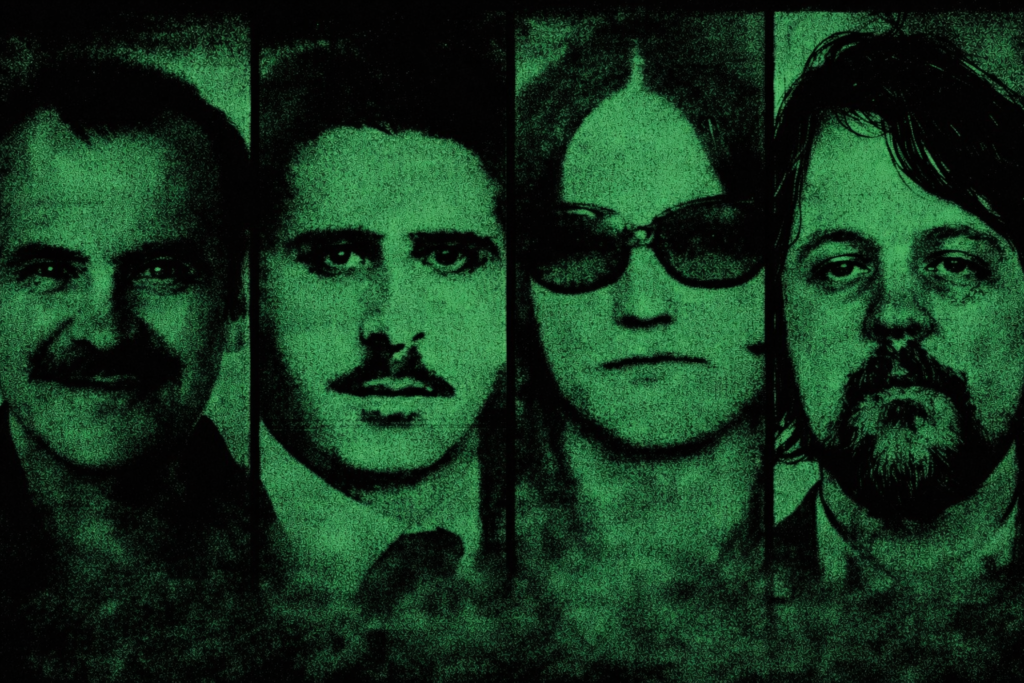
On June 27, 1976, Air France Flight 139 departed Tel Aviv for Paris with a scheduled stop in Athens. Shortly after takeoff from Greece, four hijackers seized the aircraft: two members of the Popular Front for the Liberation of Palestine – External Operations, and two German militants affiliated with the Revolutionary Cells. The composition mattered. This was not a religious coalition, but a deliberately international one, blending Middle Eastern nationalist militancy with European left-wing radicalism. Ideology was less important than optics. The message was meant to travel.
The aircraft was diverted first to Benghazi, then flown more than 2,300 miles to Entebbe Airport in Uganda. President Idi Amin, eager for relevance on the world stage and sympathetic to anti-Israeli causes, welcomed the hijackers and placed Ugandan forces at their disposal. The hostages were transferred to the old terminal building, a decaying structure left behind by the British. The setting was theatrical in its own way: isolated, remote, and controlled.
Within hours, the rules of the drama were established. Non-Israeli passengers were gradually released. Israeli passengers and Jewish passengers were separated and retained. The hijackers issued demands for the release of dozens of prisoners held in Israel and elsewhere. A deadline was set. Extensions were granted. Negotiations proceeded publicly, mediated through governments and broadcast to the world.
The separation of passengers marked a critical escalation. It stripped away any pretense that this was simply political leverage abstracted from identity. The act itself became the message. Yet international response followed a familiar script. Condemnations were issued. Negotiations were discussed. Time passed.
Israel faced a dilemma that had been rehearsed repeatedly since Munich. Compliance would reinforce the method. Refusal risked mass death. Publicly, Israeli officials spoke the language of diplomacy. Privately, they prepared something else entirely.
On the night of July 3–4, Israeli commandos landed at Entebbe in a C-130 transport aircraft, flying low to evade radar. They drove from the plane in a black Mercedes designed to resemble Idi Amin’s motorcade, exploiting the same reliance on appearances that had enabled the hijacking in the first place. Within minutes, the terminal was under assault. All but three of the hostages were rescued. All of the hijackers were killed. One Israeli officer, Lt. Col. Yonatan Netanyahu, was fatally wounded during the operation.
The operation ended the standoff abruptly. There were no extended negotiations, no final broadcast countdown, no negotiated release. The spectacle was broken.
What followed was a stark divergence from the Munich template. For once, a state refused to play its assigned role. Instead of stretching the drama, Israel collapsed it. Instead of allowing time to serve the attackers, time was denied them. The method failed not because it was flawed, but because it was interrupted decisively.
International reaction was conflicted. Public admiration for the precision and daring of the raid coexisted with unease about the precedent it set. Questions of sovereignty, escalation, and legality surfaced immediately. The focus shifted, subtly but unmistakably, away from the hijackers and toward the responding state. This inversion would become familiar in later decades.
Yet Entebbe demonstrated something that would prove uncomfortable for many governments: the spectacle of hostage terrorism depended on compliance with its pacing. When that pacing was denied, the leverage evaporated. The world learned that the method was not invincible. What it required was not just violence, but institutional restraint and narrative hesitation.
That lesson was largely ignored.
In the years that followed, hijackings continued. Embassy seizures multiplied. Suicide bombings emerged as the next evolution of the same logic. The Entebbe response was admired, but rarely emulated. Most states concluded that the risks—political, legal, reputational—were too high. Negotiation returned as the default posture. The method survived intact.
Entebbe occupies an uneasy place in the historical record. It does not fit neatly into the story that came later. It interrupts rather than confirms. It shows that the trajectory from Munich was not inevitable, that alternatives existed and were tested. That makes it an uncomfortable case study, particularly for institutions that would prefer to treat modern terrorism as an unstoppable force rather than a method contingent on response.
In retrospect, Entebbe reads like a momentary refusal of the script. The hostages vanished not because the attackers succeeded, but because the stage was taken away. The audience was left with no role to play.
The method moved on anyway.
Citations
• Encyclopaedia Britannica – “Entebbe Raid”
• BBC News – “Operation Entebbe: The Raid That Rescued Hostages” (July 4, 2016)
• New York Times – “Israelis Raid Uganda Airport; Hostages Freed” (July 5, 1976 archive)
• U.S. Department of State – Office of the Historian, “Air France Hijacking and Entebbe Rescue”
• Council on Foreign Relations – “The Entebbe Raid” Backgrounder